
Symbolism and Significance Around the Globe: Butterflies in Culture

Butterflies, with their vibrant colors, delicate wings, and graceful flight, have long captivated the human imagination. Beyond their natural beauty, butterflies hold a special place in cultures around the world, symbolizing a variety of concepts and embodying different meanings. From ancient myths to modern art, butterflies have been a source of inspiration and a powerful symbol in various cultural contexts.

Ancient Cultures and Mythology

In ancient Greece, butterflies were associated with Psyche, the goddess of the soul. The Greek word for butterfly, “psyche,” shares the same root as the word for soul, reflecting the belief that butterflies were the souls of the dead or representations of the soul’s immortality. This connection is also seen in the myth of Cupid and Psyche, where Psyche is depicted with butterfly wings, symbolizing the soul’s journey towards enlightenment and the ultimate union with the divine.

In ancient Mexico, the Aztecs believed that butterflies were the spirits of the dead warriors who had died in battle. They were seen as symbols of courage and resilience, fluttering back to earth to visit their loved ones. This belief highlights the deep cultural significance of butterflies in indigenous American traditions.

Asian Symbolism

In Chinese culture, butterflies are a symbol of love and are often associated with relationships and marriage. The Chinese character for butterfly is a combination of the characters for “seventy” and “ten,” which together signify a long and happy marriage. Butterflies are also seen as symbols of transformation and rebirth, mirroring the metamorphosis from caterpillar to butterfly.

In Japan, butterflies are known as “cho,” and they symbolize lightness, joy, and summertime. They are also associated with young love and are often featured in traditional Japanese art, such as kimonos and ukiyo-e prints. The pairing of two butterflies is a common motif, representing marital happiness and harmony.

Native American Beliefs

Among Native American cultures, butterflies carry a variety of meanings. For some tribes, the butterfly is a symbol of change, renewal, and hope. It is believed to carry the whispered wishes of children up to the heavens. The Navajo, for example, see butterflies as symbols of beauty and deep spiritual insight. In some traditions, the butterfly is also a messenger from the spirit world, bringing messages from ancestors or guiding lost souls to the afterlife.

Art and Literature

Butterflies have been a popular motif in art and literature, often representing themes of transformation, beauty, and the fleeting nature of life. In the works of Vincent van Gogh, butterflies symbolize the transient beauty of life and the artist’s own struggle with change and transformation.

In literature, butterflies have been used as symbols by authors such as Vladimir Nabokov, who was fascinated by lepidoptery and incorporated butterfly symbolism into his novels. The butterfly in Nabokov’s works often represents the elusive nature of beauty and the complexity of human desire.

Modern Interpretations

In contemporary culture, butterflies continue to be a powerful symbol. They are often associated with personal growth, overcoming challenges, and embracing change. Butterfly tattoos, for example, are popular choices for individuals who wish to commemorate a significant life change or personal transformation.

Environmentalists have also adopted the butterfly as a symbol for conservation and the protection of biodiversity. The delicate nature of butterflies and their sensitivity to environmental changes make them a potent symbol for the need to preserve natural habitats and ecosystems.

Conclusion

Butterflies, with their enchanting beauty and remarkable life cycle, have been a source of inspiration and symbolism across different cultures and throughout history. Whether representing the soul, love, transformation, or the fleeting nature of life, butterflies continue to captivate the human imagination and serve as a reminder of the interconnectedness of all living things. As we continue to explore the world around us, the butterfly remains a timeless symbol of hope, beauty, and the endless possibilities of change.

Influencers and Their Impact on Culture: The Power of Persuasion

In the digital age, the landscape of cultural influence has undergone a seismic shift. Traditional gatekeepers of culture, such as celebrities and public figures, have been joined and in some cases, supplanted by a new breed of cultural arbiters: influencers. These individuals, often rising to prominence through social media platforms, wield a potent power of persuasion that shapes trends, opinions, and behaviors across the globe. This article delves into the mechanics of influencer persuasion and examines their profound impact on contemporary culture.

The Rise of the Influencer

Influencers are individuals who have built a dedicated following based on their expertise, personality, or lifestyle. They are found across various platforms, including Instagram, YouTube, TikTok, and Twitter, and cover a wide range of niches from fashion and beauty to fitness and technology. What sets influencers apart is their relatability and authenticity qualities that have endeared them to their audiences and made them powerful agents of cultural change.

The Mechanics of Influencer Persuasion

Influencers exert their influence through several key mechanisms:

  1. Trust and Relatability: Influencers often share personal stories, experiences, and opinions, which fosters a sense of trust and relatability with their audience. This emotional connection is a powerful persuasive tool, as followers are more likely to be influenced by someone they perceive as genuine and similar to themselves.
  2. Aspirational Content: While influencers are relatable, they also curate content that showcases an aspirational lifestyle. This creates a desire among their followers to emulate their choices, whether it’s in fashion, travel, or lifestyle habits.
  3. Community Building: Influencers create a sense of community among their followers, often encouraging engagement through comments, likes, and shares. This sense of belonging can be a strong motivator for followers to adopt the influencer’s recommendations as a way to maintain their membership in the community.

Impact on Culture

The persuasive power of influencers has had a significant impact on culture in several ways:

  1. Shaping Trends: Influencers are trendsetters in fashion, beauty, and lifestyle. Their endorsements can catapult a product, brand, or style to popularity overnight. This influence extends beyond material goods; influencers also shape cultural trends, including social movements and political opinions.
  2. Consumer Behavior: The purchasing decisions of consumers are increasingly influenced by influencers. Whether it’s through sponsored content or genuine recommendations, influencers can significantly impact what products and services gain traction in the market.
  3. Social and Political Impact: Influencers also wield influence in the social and political spheres. They can raise awareness about issues, mobilize their followers for causes, and even influence political outcomes. The visibility and credibility they enjoy among their audience make them effective advocates for change.

The Future of Influencer Impact

As the digital landscape continues to evolve, the role of influencers in shaping culture is likely to grow. With the advent of new technologies and platforms, influencers will find new ways to connect with their audiences and exert their persuasive power. However, this influence also comes with responsibilities. Influencers are increasingly being called upon to use their platforms ethically, promoting positive messages and being transparent about their partnerships and endorsements.

In conclusion, the power of persuasion wielded by influencers is reshaping the cultural landscape in profound ways. From setting trends to influencing consumer behavior and advocating for social change, influencers are at the forefront of cultural evolution. As we navigate this ever-changing digital world, the impact of influencers on culture will continue to be a subject of fascination, study, and debate.

The Culture and History of Ancient Egypt

Ancient Egypt, one of the most fascinating civilizations in human history, thrived for over three millennia along the fertile banks of the Nile River. Its rich cultural heritage, monumental architecture, and profound contributions to various fields such as art, science, and religion continue to captivate the world. This article delves into the history and culture of Ancient Egypt, exploring its origins, major achievements, and enduring legacy.

Origins and Early History

Ancient Egypt’s history is traditionally divided into several periods: the Pre-Dynastic Period, the Old Kingdom, the Middle Kingdom, the New Kingdom, and the Late Period.

  • Pre-Dynastic Period (c. 6000–3150 BCE): This era saw the gradual development of agriculture, settlement patterns, and social structures. Small communities along the Nile began to coalesce into larger political entities.
  • Early Dynastic Period (c. 3150–2686 BCE): The unification of Upper and Lower Egypt under the first pharaoh, Narmer, marked the beginning of pharaonic civilization. The establishment of Memphis as the capital set the stage for the centralization of power.

The Old Kingdom (c. 2686–2181 BCE)

Known as the “Age of the Pyramids,” the Old Kingdom is renowned for its architectural marvels, particularly the Great Pyramid of Giza. Pharaohs like Djoser, who built the Step Pyramid, and Khufu, who constructed the Great Pyramid, demonstrated the kingdom’s engineering prowess. The period also saw the development of a highly organized bureaucratic system and the strengthening of the pharaoh’s divine status.

The Middle Kingdom (c. 2055–1650 BCE)

The Middle Kingdom is often regarded as a classical age of art and literature. Pharaohs like Mentuhotep II and Sesostris III worked towards reunifying Egypt after a period of political fragmentation. This era witnessed an expansion in trade, the flourishing of literature, and advancements in irrigation techniques, which improved agricultural productivity.

The New Kingdom (c. 1550–1070 BCE)

The New Kingdom was a time of empire-building and military conquests. Notable pharaohs such as Hatshepsut, Akhenaten, and Ramses II left indelible marks on history. Hatshepsut, one of the few female pharaohs, expanded trade networks and commissioned magnificent building projects. Akhenaten is remembered for his religious revolution, wherein he promoted the worship of a single deity, Aten. Ramses II, famed for his military campaigns and monumental building projects, is often considered one of Egypt’s greatest pharaohs.

Culture and Society

Ancient Egyptian culture was deeply intertwined with its religious beliefs. The Egyptians practiced a polytheistic religion, worshipping a pantheon of gods and goddesses, each associated with specific aspects of life and nature. Temples, rituals, and festivals played a central role in daily life.

  • Art and Architecture: Egyptian art is characterized by its adherence to a strict set of conventions, aimed at ensuring order and stability. Statues, paintings, and reliefs often depicted gods, pharaohs, and daily life scenes with remarkable detail and symbolism. Monumental structures like pyramids, temples, and obelisks demonstrated their architectural ingenuity.
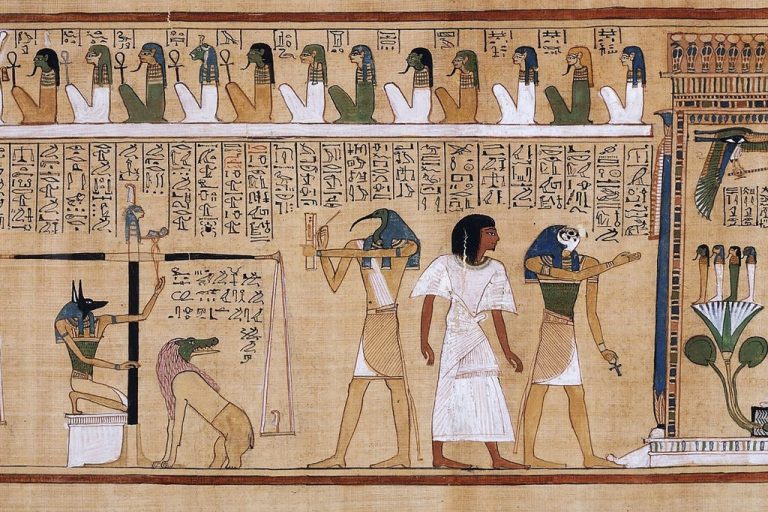
  • Writing and Literature: Hieroglyphics, the writing system of ancient Egypt, was used for religious texts, official inscriptions, and monumental art. The Egyptians also developed a cursive script known as hieratic for everyday use. Literary works such as “The Tale of Sinuhe” and “The Book of the Dead” offer insights into Egyptian beliefs, values, and daily life.
  • Science and Technology: Ancient Egyptians made significant advancements in various fields. They developed a calendar based on the lunar and solar cycles, employed sophisticated medical practices, and excelled in engineering and mathematics, which facilitated the construction of their monumental architecture.

Decline and Legacy

The Late Period saw a series of foreign invasions and internal strife, leading to the eventual decline of ancient Egyptian civilization. The conquest by Alexander the Great in 332 BCE and the subsequent Ptolemaic and Roman rule marked the end of pharaonic Egypt.

Despite its decline, the legacy of ancient Egypt endures. Its contributions to art, architecture, literature, and science continue to influence modern culture. The fascination with ancient Egypt is reflected in numerous archaeological discoveries, museum collections, and popular media, ensuring that this remarkable civilization remains alive in our collective imagination.

Conclusion

Ancient Egypt’s history and culture offer a window into a civilization that was both innovative and profoundly spiritual. From the grandeur of the pyramids to the intricacies of their religious beliefs, the Egyptians left an indelible mark on human history. Understanding their achievements and way of life provides valuable insights into the foundations of human civilization.