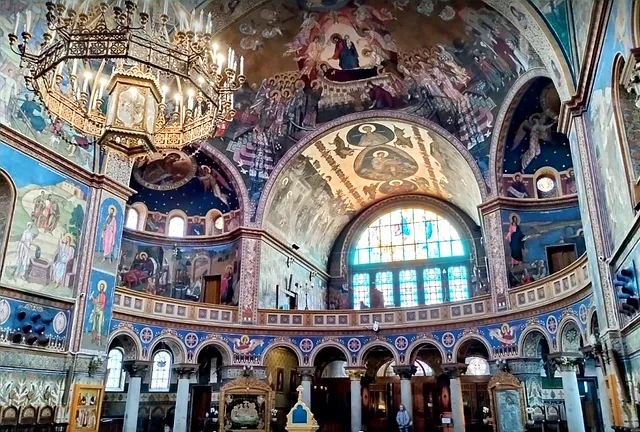
Faith and Architecture: The Romanian Orthodox Church

velikaplaza.info – The Romanian Orthodox Church, a branch of the wider Eastern Orthodox Church, is not only a religious institution but also a custodian of a rich cultural and architectural heritage. With its roots deeply embedded in the Byzantine tradition, the Romanian Orthodox Church has developed a unique character that reflects the history, faith, and artistic sensibilities of the Romanian people. This article explores the intricate relationship between the Romanian Orthodox faith and its architectural expressions, highlighting the symbiosis of spirituality and aesthetics that defines this venerable institution.

The Historical Context

The history of the Romanian Orthodox Church is intertwined with the broader narrative of Christianity in Romania, which dates back to the early Christian period. However, it was under the influence of the Byzantine Empire, particularly after the conversion of Prince Boris I of Bulgaria to Christianity in 864, that Orthodoxy began to spread more widely in the territories that would become modern-day Romania. The establishment of the Romanian principalities of Wallachia and Moldavia in the 14th century further solidified the role of the Orthodox Church in the region.

Theological Foundations

The Romanian Orthodox Church adheres to the teachings and traditions of the first seven Ecumenical Councils, emphasizing the importance of the sacraments, the veneration of icons, and the communion of saints. The liturgy, primarily conducted in Church Slavonic until the 19th century and now in Romanian, is a cornerstone of Orthodox worship, embodying the mystical and communal aspects of the faith.

Architectural Expressions

Byzantine Influences

The architecture of the Romanian Orthodox Church is heavily influenced by Byzantine models, with the domed basilica being the most common form. These structures, often built of brick and stone, are adorned with frescoes and icons that serve both decorative and educational purposes, illustrating biblical stories and the lives of saints.

Unique Romanian Elements

Over time, Romanian architects and craftsmen have infused these Byzantine influences with local elements, creating a distinctive style. The use of colorful ceramic roof tiles, the incorporation of local flora and fauna in decorative motifs, and the adaptation of church designs to the rugged Carpathian landscape are just a few examples of this synthesis.

Notable Examples

Some of the most renowned Romanian Orthodox churches and monasteries include the Horezu Monastery, a UNESCO World Heritage site known for its harmonious proportions and exquisite frescoes; the Voroneţ Monastery, famous for its “Voroneţ blue” frescoes; and the Curtea de Argeş Cathedral, a masterpiece of Brâncovenesc style architecture.

The Role of Churches in Community Life

Beyond their religious functions, Romanian Orthodox churches have historically served as centers of community life, education, and resistance against foreign domination. They have been places of refuge, schools, and, in times of war, even fortresses.

Conclusion

The Romanian Orthodox Church stands as a testament to the enduring faith and artistic creativity of the Romanian people. Its architecture, a blend of Byzantine tradition and local innovation, embodies the spiritual and cultural identity of Romania. As the Church continues to evolve in the modern world, its historic buildings and sacred spaces remain powerful symbols of continuity and resilience, bridging the past and the present.
Their Writings and Influence: The Church Fathers

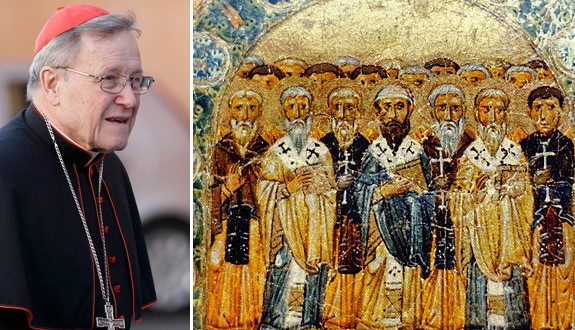
velikaplaza.info – The Church Fathers, a term that refers to the early Christian theologians and writers who established the foundational doctrines of Christianity, played a pivotal role in the development of Christian theology, ethics, and practices. Their writings, spanning from the late 1st century to the 8th century, have had a profound and lasting impact on the Christian faith, shaping its understanding of Scripture, the nature of God, and the life of the Church.

The Apostolic Fathers

The Apostolic Fathers were the earliest group of Church Fathers, who lived in the immediate generations following the Apostles. Figures such as Clement of Rome, Ignatius of Antioch, and Polycarp of Smyrna, among others, were instrumental in preserving the apostolic teachings and combating heresies. Their writings, including letters and epistles, emphasized the importance of unity within the Church, the authority of bishops, and the moral life of believers.

The Ante-Nicene Fathers

The Ante-Nicene Fathers were the Church Fathers who wrote before the First Council of Nicaea in 325 AD. This period saw the rise of significant theologians like Irenaeus, Tertullian, Origen, and Cyprian. They engaged in extensive apologetic work, defending Christianity against pagan critics and refuting various heresies. Their writings also delved into the nature of Christ, the Holy Spirit, and the Church, laying the groundwork for later ecumenical councils.

The Nicene and Post-Nicene Fathers

Following the First Council of Nicaea, the Nicene and Post-Nicene Fathers played a crucial role in defining orthodox Christian doctrine. Key figures from this era include Athanasius, the Cappadocian Fathers (Basil the Great, Gregory of Nazianzus, and Gregory of Nyssa), Augustine of Hippo, and Jerome. Their contributions to the development of Trinitarian doctrine, Christology, and the canon of Scripture are invaluable. Augustine’s works, in particular, have had a lasting impact on Western Christianity, influencing theology, philosophy, and Church practices.

The Influence of the Church Fathers

The writings of the Church Fathers have been foundational to the development of Christian doctrine and practice. Their insights into Scripture, the nature of God, and the life of faith have shaped Christian thought for centuries. The Church Fathers’ emphasis on the unity of the Church, the authority of Scripture, and the importance of tradition has been instrumental in the formation of Christian identity.

Conclusion

The Church Fathers, through their writings and teachings, have left an indelible mark on the Christian faith. Their efforts to preserve the apostolic teachings, combat heresies, and articulate Christian doctrine have laid the foundation for the development of Christianity. Today, their works continue to be studied and revered, offering timeless wisdom and guidance for the life of the Church.

The Astronomer Who Defied the Church: Galileo Galilei

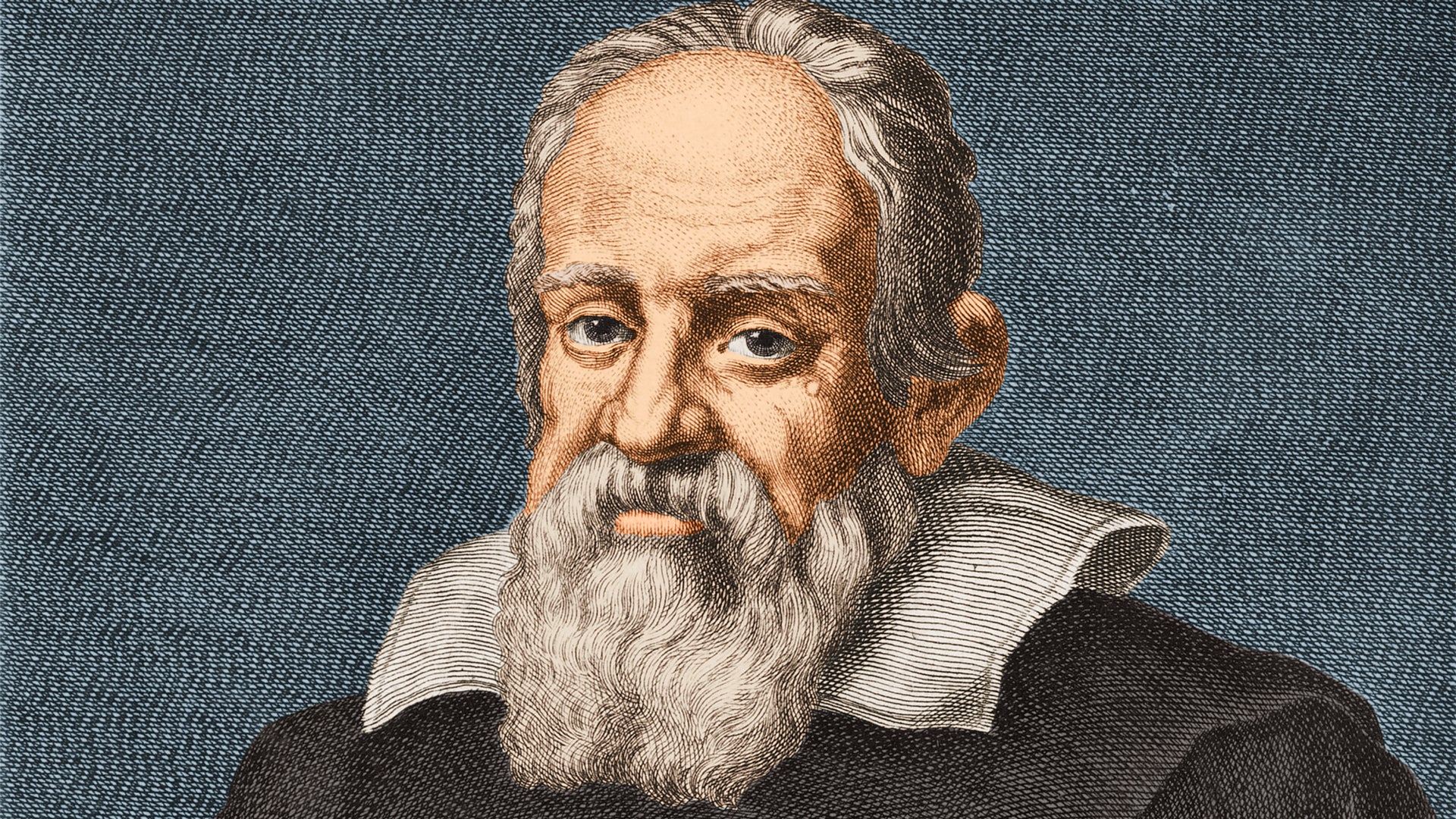
velikaplaza.info – Galileo Galilei, born in Pisa, Italy, in 1564, is celebrated as one of the most influential scientists in history. His contributions to astronomy, physics, and the scientific method laid the groundwork for modern science. However, Galileo is perhaps best known for his confrontation with the Roman Catholic Church, a conflict that has become a symbol of the struggle between scientific discovery and religious dogma.

The Birth of a Scientist

Galileo’s journey began with his keen interest in mathematics and the natural world. Despite his father’s wish for him to become a physician, Galileo’s passion for science led him to pursue a career in mathematics and philosophy. His early experiments with pendulums and his development of a more accurate thermometer showcased his innovative mind.

The Telescope and New Discoveries

In 1609, Galileo heard about the invention of the telescope in the Netherlands. Quickly grasping its potential, he built his own, improving its magnification power. Pointing his telescope to the heavens, Galileo made groundbreaking discoveries. He observed the mountains and craters on the Moon, the phases of Venus, and the moons orbiting Jupiter. These discoveries challenged the prevailing geocentric model of the universe, which placed Earth at the center, and supported the heliocentric theory proposed by Copernicus.

Conflict with the Church

Galileo’s findings contradicted the Church’s interpretation of the Bible, which supported the geocentric model. In 1616, the Church declared the heliocentric theory heretical, and Galileo was ordered not to hold, teach, or defend this view. However, in 1632, Galileo published “Dialogue Concerning the Two Chief World Systems,” which compared the Copernican and Ptolemaic systems, subtly favoring the former.

The Trial and Its Aftermath

The publication of the “Dialogue” led to Galileo’s trial by the Inquisition in 1633. Despite his attempts to defend his work, Galileo was found guilty of heresy. He was sentenced to house arrest for the remainder of his life and forced to recant his beliefs. The Church’s condemnation of Galileo’s work was not officially revoked until 1992, when Pope John Paul II acknowledged the errors committed by the Church in the Galileo affair.

Legacy

Galileo’s contributions to science and his conflict with the Church have made him a symbol of the struggle between science and religion. His work laid the foundation for modern astronomy and physics, and his insistence on empirical evidence as the basis for scientific knowledge has become a cornerstone of the scientific method.

Galileo Galilei’s life and work remind us of the importance of questioning established beliefs and the value of pursuing knowledge, even in the face of opposition. His legacy continues to inspire scientists and thinkers to challenge the status quo and to seek a deeper understanding of the universe.